

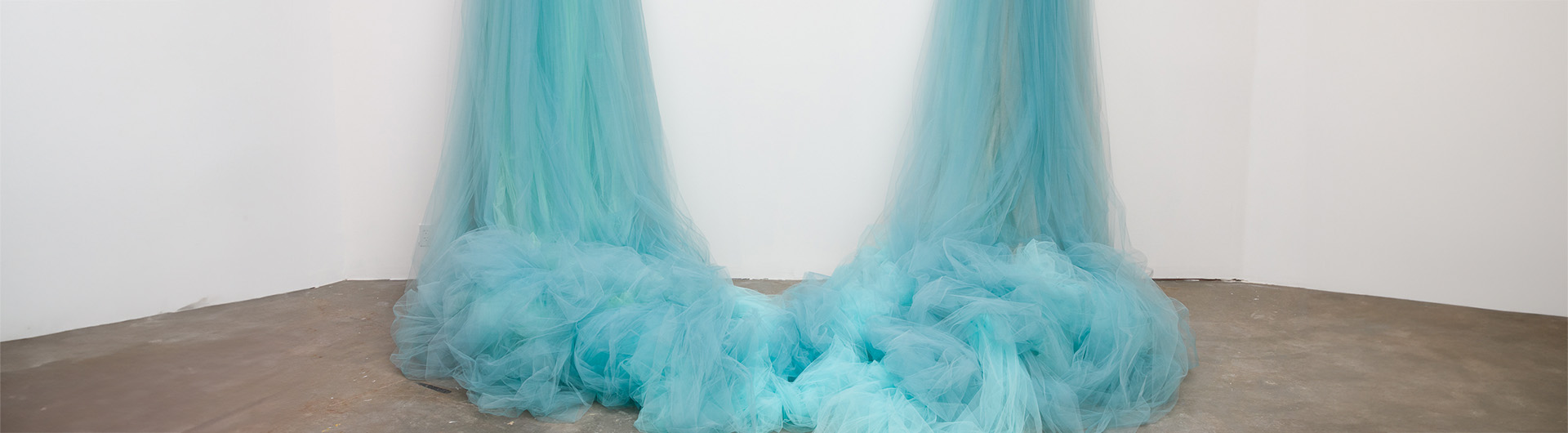
Ana María Hernando’s solo exhibition at the Fine Arts Center is a proposition to pay close attention to the world around us.
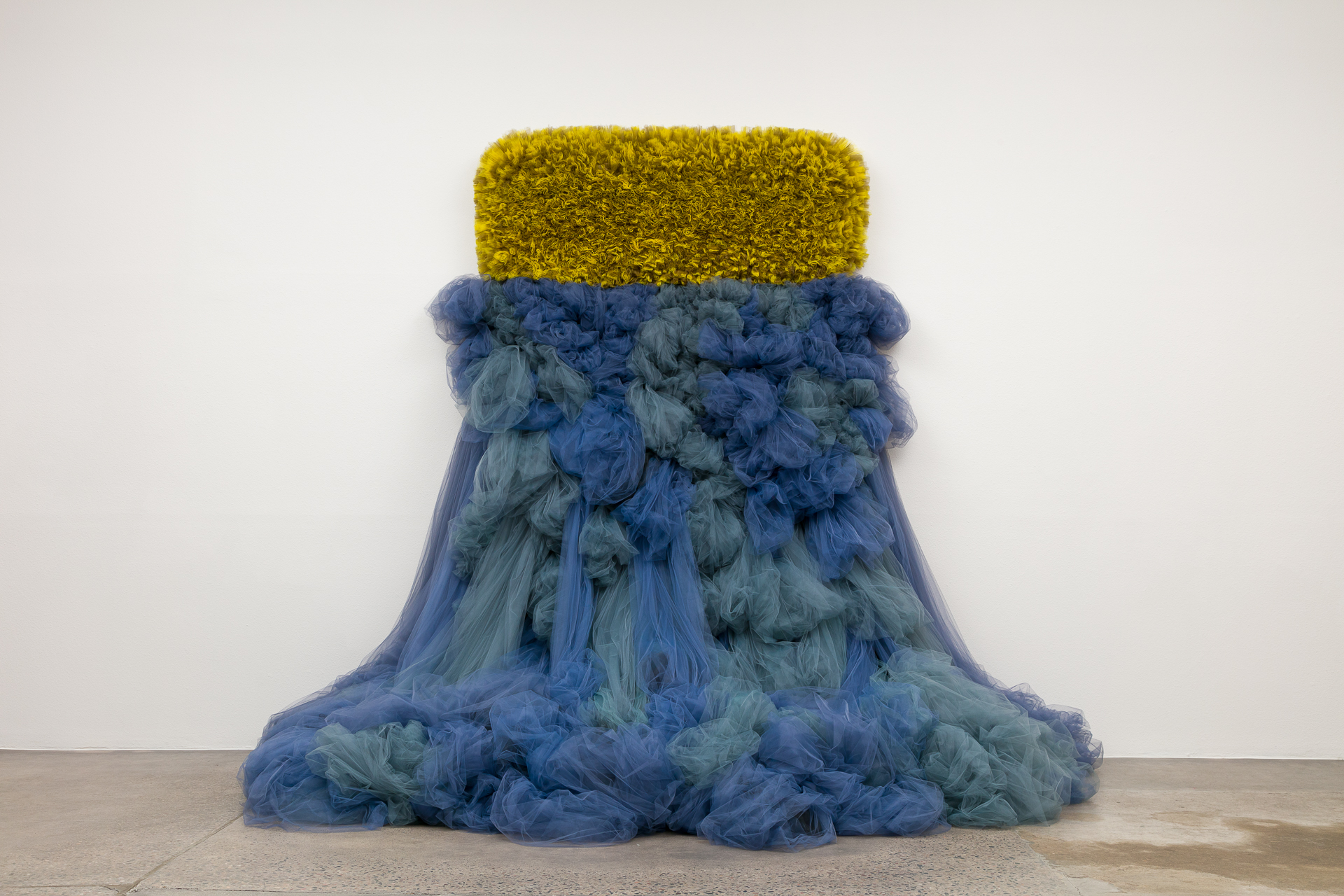
Hernando is perhaps best known for her works made of tulle, a soft, pliable material that comes in a wide range of colors. Constructed from netted fabric threads, tulle—delicate yet strong, flexible yet resilient—embodies seemingly contradictory qualities. It appeals to Hernando for this reason, and also for its cultural associations with fashion, especially garments traditionally worn by women, such as bridal wear. While Hernando draws on these associations, she also deliberately subverts them. Rather than reinforcing archetypes of feminine innocence or fragility, she uses tulle to, in her words, “talk about power.” As she puts it, “Soft does not mean weak.”
At the Fine Arts Center, Hernando presents her tulle sculptural constructions in various scales, ranging from intimate wall hangings to immersive installations. Some works frame the doorways of the gallery spaces in bright pink and orange. Others evoke organic forms, such as waterfalls and mountains, in azure blues and petal pinks. Drawing on cultural traditions central to her upbringing in Argentina, Hernando reflects on a belief deeply rooted in Andean culture: that natural formations such as mountains are living, divine beings containing both masculine and feminine energies. The tulle works acknowledge this philosophy by emphasizing the softness and vibrancy of monumental formations, inviting visitors to experience these energies in both the natural world and the museum galleries.
The exhibition also features several embroidery works and sound pieces, such as Écoutons / Let’s Listen / Escuchemos (2020), made at the outset of the pandemic. Hernando invited friends from around the world to send her recordings of their surroundings, with a particular emphasis on birdsong. She received more than two hundred submissions from eleven countries. In response, she created a series of embroideries featuring simple organic compositions made with bold-colored yarns, which serve as a visual counterpart to the collected sounds. Thinking of this period, Hernando notes that quarantine required many people to slow down and “uncovered a thirst to be present, a need to be connected to nature, and, between each other, a need to express care.” The sounds and embroideries are a reminder of this shared opportunity to listen and respond softly.
The installation Flor presagiada por el agua (Flower Foretold by Water) (2016) marks a moment to pause within Hernando’s exuberant presentation. Featuring a large-scale floral painting on paper in a darkened space accompanied by a sound work that evokes flowing water, it is quiet and intimate, yet emphasizes the power of such moments to foster reflection, attention, and connection.
Ana María Hernando: Cantando Bajito (Singing Softly) is curated by Katja Rivera in collaboration with the artist. Support for the exhibition is generously provided by The Margaret L. Lane Fund, The Anschutz Foundation, and Colorado Creative Industries.
Skip the line and reserve your museum tickets in advance!
Top image: Ana María Hernando, El intento del agua/The Intent of Water (detail), 2025. Tulle, velvet, wood, metal lattice, felt, plexiglass. Photo Wes Magyar.
Explore Our Free Digital Guide
Explore the Fine Arts Center’s museum with our free digital guide! Our guide offers digital access to works in our collection, including exclusive audio from curators, suggested tours, and more. Browse the guide on the web or enjoy our optimized guide on Bloomberg Connects, the free arts and culture app.
Want to experience more of Ana María Hernando’s work?
On view March 5-July 5, 2026 at Museum of Contemporary Art Denver: Ana María Hernando: Seguir cantando (Keep Singing)
Ana María Hernando presents new and recent work rendered in her signature materials: tulle, textiles, paintings, and works on paper to explore how color, song, and poetry are potent emblems of strength, persistence, and rebirth. Learn more
Image: Ana María Hernando, We Cannot Weep Without Vibrating the Waters, 2022. Tulle, wire, wood and felt. Dimensions variable. Courtesy of Robischon Gallery.
Sponsors